Skydiving training in Thailand is the natural next question for anyone who lands from a tandem jump wanting more. The route from a first jump to a solo licence usually runs through an AFF course, and while Pattaya Skydiving books tandem jumps rather than courses, the desk can point you toward training at the dropzones on the Chonburi coast. This guide explains how to get a skydiving licence in general terms, what an AFF course in Thailand typically involves, what a USPA licence means in Asia, and how to enquire.
Quick answer
As of September 2026, Pattaya Skydiving does not sell skydiving training or licence courses; it books tandem jumps at Thai Sky Adventures and Dropzone Thailand near Pattaya. Readers who want to learn to skydive can send an enquiry through the contact page and be directed to the dropzone. A tandem jump from 13,000 ft over the Gulf of Thailand is the recommended first step before any course.
- Pattaya Skydiving books tandem jumps only; training enquiries go via the contact page
- AFF (Accelerated Freefall) is the most common route to solo jumping, taught in stages
- A tandem jump lets you test the exit, freefall, and canopy ride before committing to a course
- Course prices, durations, and entry requirements are set by the dropzone and confirmed on enquiry
- Both dropzones are on the Chonburi coast, approximately 1.5 to 2 hours by road from Bangkok
Why a tandem jump is the right first step
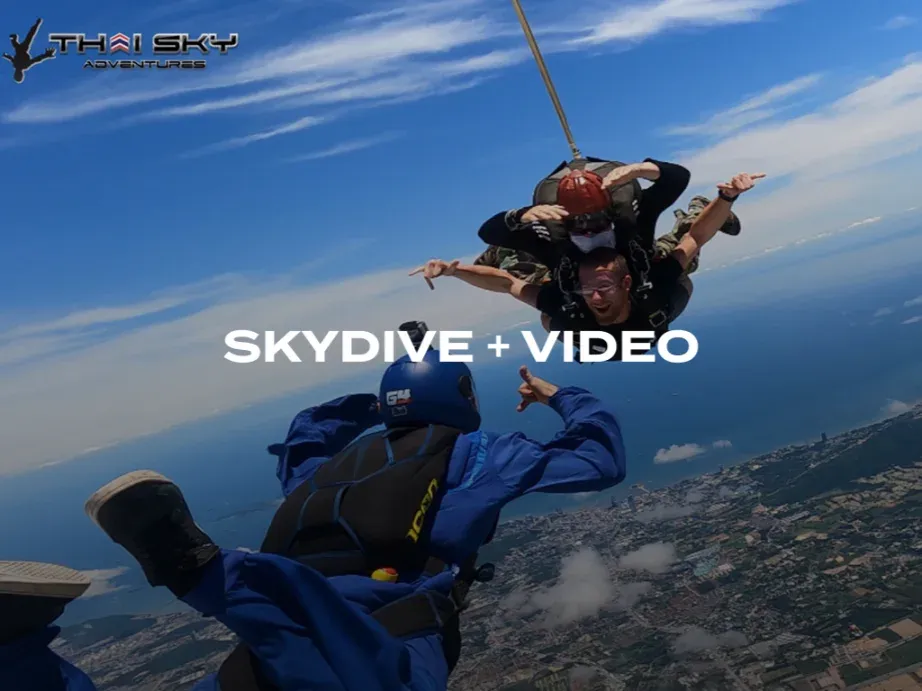
A licence course is a real commitment of time, money, and nerve. A tandem jump is the cheapest way to find out whether you want that commitment. You exit at 13,000 ft, fall for about 60 seconds at roughly 200 km/h, and spend about two and a half minutes under canopy while an instructor handles everything. If you land wanting to do it again on your own, you have your answer.
Tandem jumps also teach more than people expect: the arch position, how the exit feels, what the opening shock is like, and how to lift your legs for landing. Instructors at both Pattaya dropzones often let passengers steer the canopy for a while, a first taste of the control a course teaches properly.
There is a third reason. A tandem jump costs between ฿8,450 ($235) and ฿13,000 ($365) as listed on 3 September 2026, depending on the camera package. A course is a much larger spend, and it makes sense to test your appetite for the sport with the smaller number first. The prices page lists all seven packages, and the tandem skydiving in Pattaya guide covers the whole day.
Tom, United Kingdom, Eco: "I was terrified at the door. Sixty seconds later I was asking how much a license course costs. Instructors are absolute pros."
How to get a skydiving license
The path to a skydiving licence looks broadly similar wherever you train, even though the details are set by each dropzone and its governing body. The sequence below is the general shape, not a description of any specific course near Pattaya; jump numbers and prices come from the dropzone that runs the course.
- Do a tandem jump. It is not always compulsory, but it settles the question of whether you want to continue and gives you a first feel for the exit, freefall and canopy.
- Complete ground school. This is a classroom and practical day covering the equipment, body position, exit technique, canopy control, landing pattern and emergency procedures. You do not go up until you pass it.
- Jump the AFF levels. You exit with your own parachute while instructors hold on and signal corrections. Contact is reduced as you show stability, turns, altitude awareness and a controlled deployment.
- Build solo jumps. Once cleared from instructor supervision in freefall, you log consolidation jumps, practise manoeuvres, and learn to fly with others under the dropzone's supervision.
- Pass the licence requirements. These typically include a minimum number of jumps, demonstrated skills, canopy accuracy, and a written test. The dropzone assesses you and the licence is issued by the governing body it works under.
A skydiving licence is issued by a national parachute body, not by the dropzone that trains you, so the same skills are recognised well beyond the place where you learned them. Ask which body your dropzone works under before you enrol; it affects where your licence is recognised later.
What AFF generally is
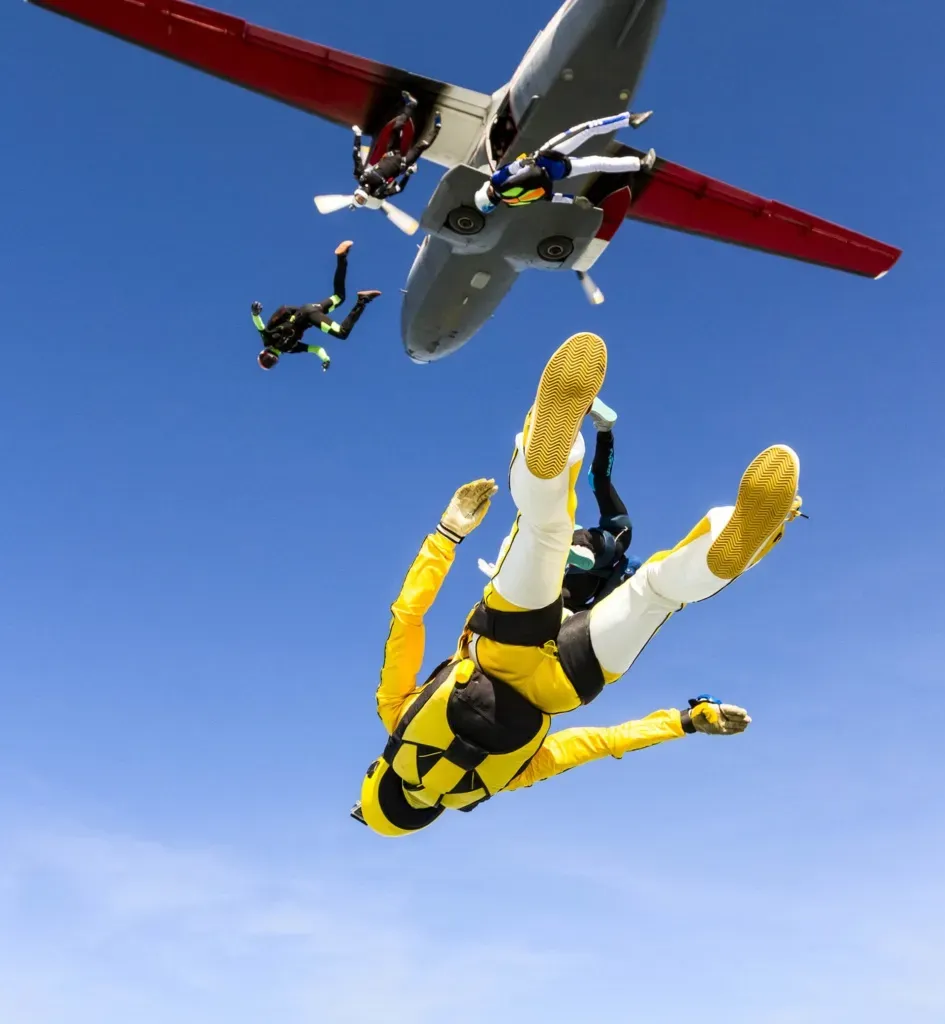
AFF stands for Accelerated Freefall. It is a method of teaching solo skydiving in which the student jumps with their own parachute from the first training jump, rather than being attached to an instructor. Instructors exit alongside the student, hold on during freefall, and use hand signals to correct body position. As the student demonstrates stability and altitude awareness, the instructors reduce contact until the student is flying alone.
The method is called "accelerated" because it puts the student in freefall from the start, rather than beginning with low-altitude static-line jumps where the parachute opens automatically. It is the standard route to a licence at many dropzones worldwide. The United States Parachute Association describes the general structure of AFF and the licence system on its website at uspa.org, and that is a good place to understand the framework before you speak to a dropzone.
USPA license in Asia: what it means and where it is recognised
USPA is the United States Parachute Association, the body that sets training and licensing standards for skydiving in the United States. It issues licences in a graded series, from the entry-level licence that permits solo jumping through to advanced grades that unlock coaching, instructing and other ratings. It also rates instructors, so "USPA-rated instructor" means the person has been assessed against a published standard.
Why does a US body matter in Asia? Because skydiving is an international sport with reciprocal recognition between national bodies. A USPA licence is generally accepted by dropzones around the world, including many in Asia, as proof that the holder has met a known standard. In practice, a visiting licensed jumper is usually asked to show the licence card, a logbook with recent jumps, and proof of currency, then sit a local briefing on the dropzone's rules, landing area and airspace. The dropzone can still decline a jumper who is out of currency or whose equipment does not meet its rules.
Some dropzones outside the United States choose to affiliate with USPA as group members or to employ USPA-rated instructors, which is one reason the phrase "USPA licence in Asia" comes up so often. Whether a particular dropzone near Pattaya trains toward a USPA licence, a Thai national licence, or another body's licence is a question for that dropzone. Send the question through the contact page and the desk will route it to the right people. The licence structure and current requirements are published at uspa.org.
AFF course in Thailand: questions to ask before you enrol
A skydiving course in Thailand is booked with the dropzone, not through Pattaya Skydiving, and the dropzone will have its own answers to the questions below. Ask all of them in writing before you pay for anything.
- Which governing body issues the licence, and is it recognised in the country where you plan to jump next?
- What is included in the quoted price: ground school, gear rental, each training jump, video debriefs, repeat jumps if you fail a level, and the licence application itself?
- How many days should you set aside, and what happens to the schedule if the weather stops loads for two or three mornings in a row?
- What are the minimum age, weight range and medical requirements for students, which may differ from the tandem limits of age 12 and around 100 kg?
- Who are the instructors, what ratings do they hold, and what is the student-to-instructor ratio on the early jumps?
- What is the refund or credit policy if you do not complete the course, whether because of weather, injury or a change of plans?
- Does your travel insurance cover training jumps, and can the dropzone confirm what its own liability cover does and does not include?
Any dropzone running a serious programme will answer these without hesitation. Vague answers about the licence body or the refund policy are a reason to look elsewhere.
Fitness, age, and time commitment
A tandem jump asks very little of your body. A course asks more. You carry your own rig, climb in and out of the aircraft repeatedly, hold an arched position for a minute at a time, and land on your own legs. You do not need to be an athlete, but reasonable flexibility, core strength, and the ability to run a few steps on landing all help.
Who can skydive
Entry requirements for training are set by the dropzone, not by Pattaya Skydiving, and they can differ from tandem limits. For tandem jumps the minimum age is 12 with a guardian's consent and the weight limit is around 100 kg, with a small surcharge possible above 90 kg. Courses may set a higher minimum age and their own weight range, and they typically require a medical declaration. The weight and age limits post covers the tandem side; ask the dropzone about the training side before you plan travel dates.
On time, the honest answer is that there is no fixed figure. Ground school takes a chunk of a day, each jump takes a load cycle, and the weather can add pauses. In Thailand weather is assessed load by load, and a student who arrives in the dry season, roughly November to February, generally sees more jumpable mornings than one who arrives in the rainy months; the best time for skydiving in Thailand guide goes through the seasons. Most people who train abroad set aside a block of days rather than trying to fit jumps around a packed holiday, and base themselves in Pattaya so that a good morning can be used as soon as it appears.
Why Pattaya is a practical base for learning
Pattaya is not the only place to skydive in Thailand, but it is a practical one for training. Both licensed dropzones, Thai Sky Adventures and Dropzone Thailand, sit on the Chonburi coast and exit over the Gulf of Thailand, so the landing areas are flat and the views are the kind that keep students motivated through repeats. The city is approximately 1.5 to 2 hours by road from Bangkok, and Suvarnabhumi Airport is approximately 1.5 hours away, which makes it easy to reach for a training block.
Pattaya also has the accommodation, food, and transport that a multi-day stay needs, which matters when you are waiting out a cloudy morning. The locations page compares the two dropzones, and the post on why skydiving in Pattaya covers the city in more detail.
How to enquire about training
Because Pattaya Skydiving books tandem jumps only, the training route runs through the contact page rather than the booking form. Here is the sequence that works.
- Book and complete a tandem jump first if you have not already. It answers the biggest question, which is whether you want to keep going.
- Send a message through the contact page, or on WhatsApp at +66 91 758 4642, saying you are interested in learning to skydive rather than a tandem jump.
- Mention your approximate dates, your current experience (for example, one tandem jump or an existing licence), and any questions about age, weight, or medical requirements.
- The desk will point you toward the right people at the dropzone. They will explain their course structure, requirements, availability, and pricing directly.
- Check your travel insurance before committing. Training jumps are treated differently from tandem jumps by many insurers; the post on skydiving insurance in Thailand explains what to look for.
Do not send card details over chat for any of this. Tandem bookings are confirmed only when the desk replies, with no prepayment on the site and payment in cash at the dropzone desk at check-in. Course payments are between you and the dropzone.
Frequently asked questions
What is AFF skydiving training?
AFF stands for Accelerated Freefall. It is a widely used method of teaching people to skydive solo, in which the student exits the aircraft with their own parachute while instructors hold on and give hand signals during freefall. Instructor contact is reduced over a series of jumps as the student shows control.
Is a USPA licence recognised in Asia?
Generally yes, with paperwork. A USPA licence is issued by the United States Parachute Association and is widely recognised by dropzones and national parachute bodies around the world, including many in Asia. Each dropzone still applies its own checks, such as a logbook review, currency rules and a local briefing, so confirm before you travel.
Do I need a tandem jump before starting a skydiving course?
Not always, but it is the sensible first step. A tandem jump shows you the exit, freefall at roughly 200 km/h, and the canopy ride with an instructor handling everything. If you still want to train after that minute of freefall, you know the course is for you before committing time and money.
Can I book a skydiving course through Pattaya Skydiving?
No. Pattaya Skydiving books tandem jumps only and does not sell training courses or licences. If you are interested in learning, send a message through the contact page and the desk will point you toward the right people at the dropzone, who can explain their own course structure, requirements, and availability.
How fit do I need to be for skydiving training?
You do not need to be an athlete, but a course is more physical than a tandem jump. You carry your own gear, repeat exits and landings, and need enough flexibility to arch and enough leg strength to land. Weight and age requirements for training are set by the dropzone and can differ from tandem limits.
How long does it take to get a skydiving licence?
There is no single answer. Progress depends on the course structure, how quickly you pass each stage, and the weather, which in Thailand is assessed load by load. Some students move quickly in a good dry-season week; others need repeats. Ask the dropzone for a realistic range before you plan your trip.
Next step
Ready when you are
Skydiving training in Thailand starts, for most people, with a single tandem jump from 13,000 ft over the Gulf of Thailand, followed by an enquiry to the dropzone about AFF. Book the tandem through the booking page or on WhatsApp at +66 91 758 4642, with hotel pickup around Pattaya included. When you land wanting more, send a message through the contact page and the desk will point you in the right direction.