Fear of skydiving is normal, and the practical answer is that it peaks at the aircraft door and drops away within seconds of leaving it. You do not need to be fearless to make a tandem jump; you need to know what the fear is made of, what the instructor and the equipment handle for you, and a few simple things to do with your breath and attention during the climb.
Quick answer
The fear of skydiving is mostly fear of the unknown, and it concentrates in one moment: the open door at 13,000 ft. At both Pattaya dropzones, Thai Sky Adventures and Dropzone Thailand on the Chonburi coast, the instructor controls the exit, freefall, parachute and landing. Slow breathing, a rehearsed sequence and looking at the horizon over the Gulf of Thailand get most first-timers through. Facts as of September 2026.
What the day actually asks of you:
- Ground briefing: about 20 minutes, three body positions to learn
- Climb: about 15 minutes, the phase where nerves usually build
- The door: a few seconds, the peak of the fear
- Freefall: about 60 seconds at roughly 200 km/h, where the fear typically vanishes
- Canopy: about two and a half minutes of quiet, the part people talk about afterwards
- Equipment: main parachute, reserve parachute and an automatic activation device on every rig
- Weather: assessed load by load; reschedules are free
What the fear of skydiving actually is
Ask a nervous first-timer what they are afraid of and the answer is usually vague: "falling", "something going wrong", "the height". Naming it precisely helps, because each piece has an answer.
| What people say they fear | What is actually happening |
|---|---|
| Falling | After the first seconds the air supports your body; it feels like lying on wind, not dropping |
| The parachute not opening | Each rig has a main, a reserve and an AAD that fires the reserve automatically if needed |
| Not knowing what to do | You have three positions to learn; the instructor does everything else |
| Losing control | You never had control to lose; you are clipped to a certified instructor at four points |
| The height | From 13,000 ft the ground looks like a map, and the depth cue that makes balconies scary is gone |
Most of these are fears of the unknown rather than of a specific danger, and the unknown is fixable with information. For the safety side in depth, see is skydiving in Thailand safe.
Why the door is the scariest part
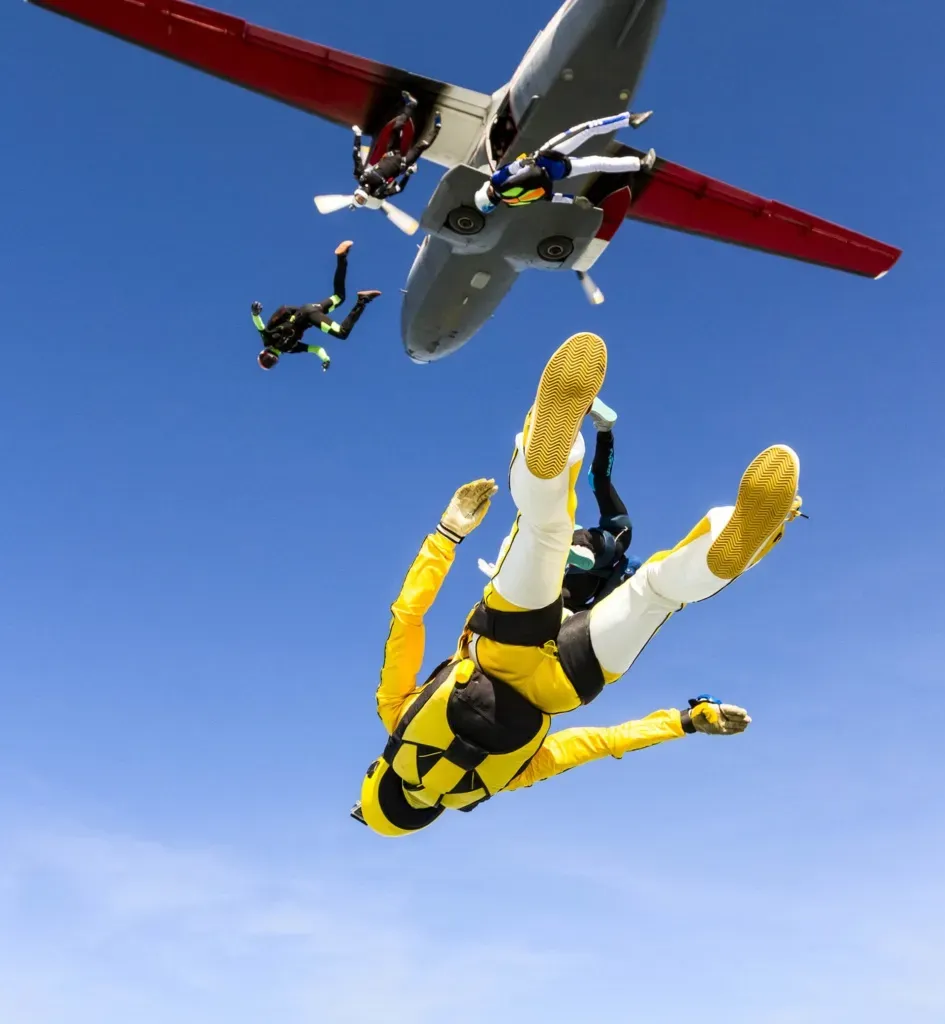
During the climb you sit in a warm, noisy aircraft with a view out of a small window. Then the door opens and three things hit you at once: the wind, the noise, and a clear line of sight to the ground. You then have to move toward the opening, against every instinct.
The door moment at 13,000 ft lasts only a few seconds, and it is the point where fear of skydiving peaks for almost every first-timer. Freefall, by comparison, has no edge to step off and nothing to decide, which is why people who were shaking at the door are often grinning two seconds later.
Two practical notes. You are not asked to jump; you sit at the edge in the exit position and the instructor rocks and goes. And keep your head back against the instructor's shoulder as taught; looking down makes the moment worse.
Replace the unknown with the sequence
The single most effective thing you can do about fear of skydiving before jump day is to know the order of events well enough to picture them. Here is the tandem sequence at both Pattaya dropzones:
- Hotel pickup and a short drive to the dropzone.
- Check-in, waiver and weight check at the desk.
- Ground briefing, about 20 minutes: exit position, freefall arch, legs-up landing, hand signals.
- Gear up: jumpsuit, harness, goggles, altimeter. Instructor checks everything twice.
- Climb, about 15 minutes. Halfway up, the instructor clips your harness to theirs at four points.
- The door: a few seconds in the exit position, then out.
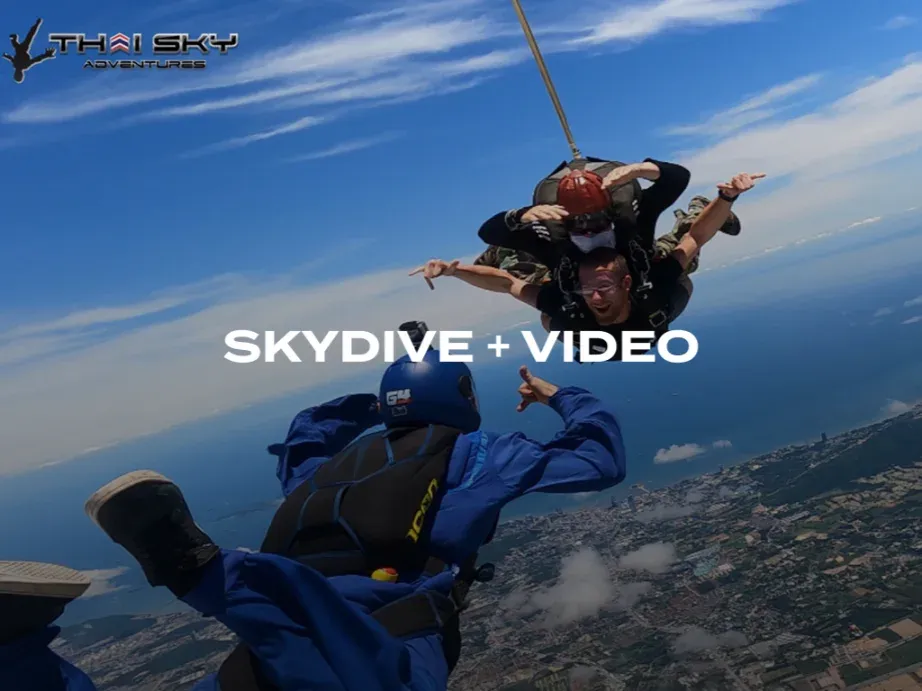
- Freefall, about 60 seconds at roughly 200 km/h, over the Gulf of Thailand.
- Parachute opens: a firm, smooth slowdown, then silence.
- Canopy ride, about two and a half minutes, often with a turn on the toggles yourself.
- Legs up, land, unclip, certificate.
Read that list twice, then picture yourself at each step. Step 9, the quiet canopy ride with the islands below, is a good picture to hold during the climb. A full walk-through of the day is in the tandem skydiving in Pattaya guide.
Trust: what the instructor and the rig do for you
A tandem jump is built so that a passenger with zero experience can do it safely; the instructor and the equipment carry the responsibility, not you.
The instructor is internationally certified and clipped to you at four points. They decide the exit timing, keep the pair of you stable in freefall, deploy the parachute at the planned altitude, steer, and land. The United States Parachute Association publishes its tandem instructor rating requirements at uspa.org.
Every tandem rig at both Pattaya dropzones carries a main parachute, a reserve parachute and an automatic activation device. The AAD fires the reserve on its own if the pair of you are still falling fast below a set altitude. You do not need to touch any of it.
Weather is the third layer of trust. It is assessed load by load, and three things stop a load: wind above limits, cloud between the aircraft and the landing area, and rain heavy enough to hurt at 200 km/h. If any is present, your load waits or is rescheduled for free.
Breathing and body: tools that work during the climb
The climb is where nerves build, because there is nothing to do for about 15 minutes, so give your attention a job.
Slow the breath out
Breathe in through the nose for a count of four, then out through the mouth for a count of six. The long exhale is the useful part. It will not remove the nerves, and it does not have to; it gives you something steady to return to at the door.
Use your eyes
Look out of the window and name what you see: the beach, the boats, the horizon. This keeps your attention outside your own head. At the door, look at the horizon, not down.
Run the three positions
Quietly go through the exit position, the freefall arch and the legs-up landing. Rehearsing them gives the nervous energy a target and reminds you that your part of the job is small and clear.
Say it out loud
Telling your instructor "I am nervous" is normal and useful. They have heard it many times and will talk you through the climb and count you down at the door. Silence makes the fear bigger.
Reframing: the same signals, a different label
Fast heart, shallow breathing, tight stomach, restless hands. These are the same signals whether you are about to do something frightening or something exciting, so many first-timers find it helps to say, plainly, "I am excited" rather than "I am scared" during the climb. It does not erase the feeling; it changes the story you tell yourself about it.
Another useful reframe is scale. The frightening part is a few seconds at the door. The reward is 60 seconds of freefall, about two and a half minutes under canopy over the Gulf of Thailand, a certificate, and a video you will show for years.
What nervous first-timers report afterwards
Reviews from people who arrived scared follow a clear pattern: the fear was real, it peaked at the door, and something bigger replaced it on the way down.
Tom from the United Kingdom, who jumped on the Eco package, wrote: "I was terrified at the door. Sixty seconds later I was asking how much a license course costs. Instructors are absolute pros."
Lukas from Germany, on the VIP package, wrote: "My girlfriend cried before and laughed for two hours after."
Neither of them overcame their fear before jumping. They got to the door frightened, followed the instructor, and the fear ended when the unknown did. That is the realistic goal: not to feel nothing, but to feel it and go anyway.
It is fine to wait, and it is fine to stop
Nobody is pushed out of an aircraft at either Pattaya dropzone; the passenger sits in the exit position and the instructor makes the exit. If you get to the door and decide not to go, the instructor brings you down with the aircraft and the desk talks through options. It is rare, but the option exists, and knowing that tends to make people calmer rather than more likely to use it.
If your nerves are about the day rather than the door, give yourself margin: book a morning with a spare day after it, so a weather reschedule is not a crisis. Sleep properly, skip alcohol, eat a light breakfast; the preparation checklist covers it.
Frequently asked questions
Is it normal to be scared before a tandem skydive?
Yes. Almost every first-timer is nervous, and many experienced jumpers still feel a spike at the door. Fear before something new and unusual is a normal response, not a sign you should not jump. What matters is having a plan for the door moment, and knowing that the fear fades within seconds of exit.
What is the scariest part of skydiving?
For most first-timers, the open aircraft door at 13,000 ft. Noise and wind arrive at once, the ground is visible, and you have to move toward the edge. It lasts only a few seconds. Freefall itself feels like lying on a wall of wind, and the canopy ride afterwards is quiet and calm.
Can I change my mind at the door?
Yes. Nobody is pushed out of an aircraft. If you decide not to exit, the instructor will bring you down with the aircraft and the desk will talk through options, including rebooking. In practice it is rare, because the exit takes seconds and the instructor guides you through it step by step.
Does the tandem instructor really control everything?
Yes. The instructor is clipped to you at four points and handles the exit timing, freefall stability, parachute deployment, steering and landing. Your only tasks are the three body positions from the briefing. Every rig carries a main parachute, a reserve parachute and an automatic activation device.
Do nervous people enjoy the jump afterwards?
The pattern in reviews is consistent: the more nervous a person was before, the bigger the reaction after landing. Several reviewers describe being terrified at the door and asking about licence courses on the ground. The fear is real but short; the memory of the view lasts much longer.
How do I calm skydiving nerves the night before?
Keep the evening simple. Eat a normal dinner, skip alcohol, and set out sporty clothes and lace-up sneakers so the morning has no decisions in it. Read the ten-step sequence once more, picture the quiet canopy ride, and sleep. Hotel pickup around Pattaya is arranged with the booking, so you only need to be ready at the door.
Next step
Ready when you are
Fear of skydiving is normal, it peaks at the door, and it ends when the unknown does. Know the sequence, trust the instructor and the three-layer rig, breathe out slowly during the climb, and look at the horizon. When you are ready, send a booking request or message the desk on WhatsApp at +66 91 758 4642; hotel pickup around Pattaya is arranged with your confirmation, and if you would rather start with the numbers, the prices page lists all seven packages.