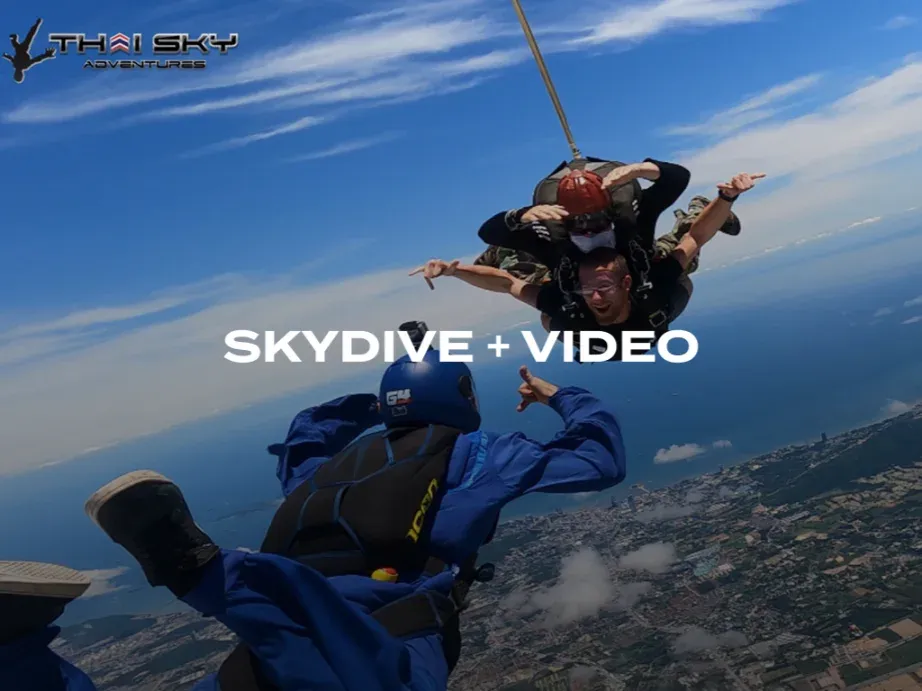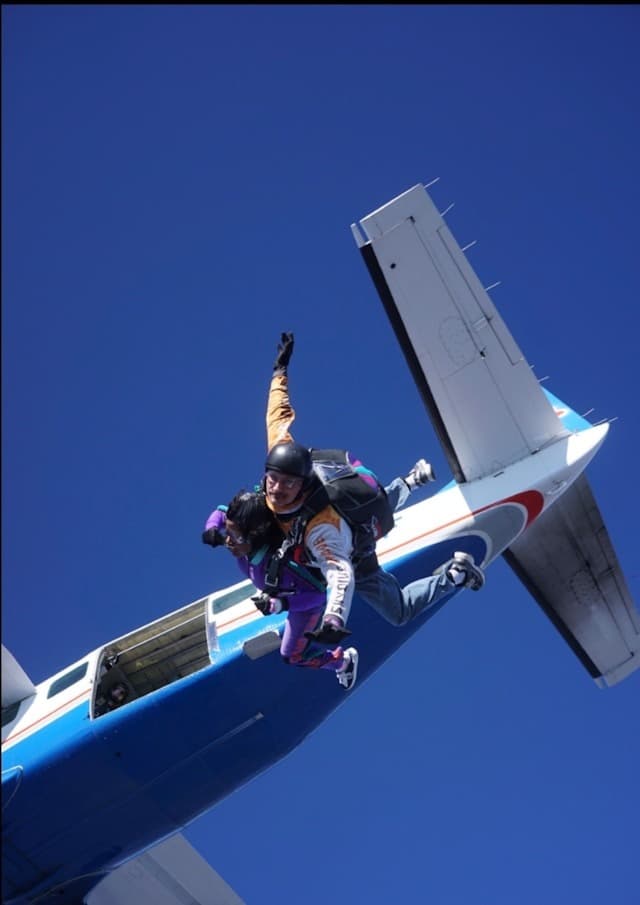
Skydiving altitude in Thailand is 13,000 ft (about 4,000 m) for tandem jumps at both licensed Pattaya dropzones. From that exit height you get roughly 60 seconds of freefall at around 200 km/h, then about two and a half minutes under the parachute above the Gulf of Thailand. This guide explains why that altitude is used, how it compares with dropzones elsewhere, what each phase of the jump feels like, and how the timing works from take-off to landing.
Quick answer
As of September 2026, tandem skydives booked through Pattaya Skydiving exit at 13,000 ft at both Thai Sky Adventures and Dropzone Thailand on the Chonburi coast. The aircraft climbs for about 15 minutes, freefall lasts about 60 seconds at roughly 200 km/h, and the canopy ride takes about two and a half minutes. Supplemental oxygen is not normally needed at this altitude.
- Exit altitude: 13,000 ft (about 4,000 m)
- Freefall: about 60 seconds at roughly 200 km/h
- Canopy flight: about two and a half minutes
- Climb in the aircraft: about 15 minutes
- Total time on site: about 4 to 5 hours, including a ground briefing of about 20 minutes
- Location: Chonburi coast, exit over the Gulf of Thailand, approximately 1.5 to 2 hours by road from Bangkok
How high do you skydive from in Thailand?
In Thailand, tandem skydives booked through Pattaya Skydiving exit at 13,000 ft at both Thai Sky Adventures and Dropzone Thailand. Every tandem package on the price list, from Eco to VIP+, exits at 13,000 ft; the price changes with the camera coverage, not the altitude. Thailand has other dropzones, and their exit heights and aircraft vary, so when you compare alternatives look at the exit altitude and the video inclusions rather than the headline price.
Skydiving height in metres
13,000 ft is about 4,000 m (3,962 m if you convert exactly). Freefall from that height lasts about 60 seconds, and the instructor opens the main parachute at a planned altitude set by the dropzone's procedures, well above the ground, which leaves about two and a half minutes under canopy. You wear an altimeter on your wrist, so you can watch the numbers come down yourself.
Standard skydiving height at other dropzones
There is no single worldwide standard. Tandem exit heights typically fall somewhere between roughly 10,000 ft and 15,000 ft, depending on the aircraft, local airspace rules and the dropzone's own procedures. Some dropzones advertise higher exits as a premium option, and those typically involve supplemental oxygen because of the thinner air. The United States Parachute Association publishes general information on tandem skydiving and equipment at uspa.org if you want to understand why dropzones worldwide settle on similar exit heights.
Why tandem jumps exit at 13,000 ft
The altitude is a balance between freefall time, safety margin, and what the body handles comfortably without extra equipment. Every tandem jump at both Pattaya dropzones exits at 13,000 ft because that height gives a full minute of freefall while leaving generous altitude for the instructor to open the parachute and deal with anything unexpected.
Go lower and the freefall shrinks quickly, because the first part of any jump is spent accelerating and a shorter exit cuts into the stable, high-speed portion people actually remember. Go much higher and the air gets thin enough that oxygen and longer climbs become factors, which adds cost and complexity without adding much to a first-timer's experience.
There is also a practical reason. A 13,000 ft climb takes about 15 minutes, which keeps loads moving through the morning. That matters in Thailand, where the best conditions are often early in the day and the dropzones assess weather load by load rather than day by day.
The climb: about 15 minutes in the aircraft
After the ground briefing, your instructor fits your harness and you walk out to the aircraft with the rest of the load. The climb to 13,000 ft takes about 15 minutes, and this is usually where nerves peak, because there is nothing to do except watch the coastline shrink. Your instructor uses the time to run through the exit position once more, check the harness connection points, and clip you together before the door opens. Both dropzones sit on the Chonburi coast, so the view on the way up includes the Gulf of Thailand on one side and inland fields on the other.
Freefall: about 60 seconds at roughly 200 km/h
The exit itself lasts a second or two. You tip out of the door, the aircraft disappears above you, and for a few seconds your stomach registers the change. Then the air takes over. A tandem pair reaches roughly 200 km/h within the first part of the fall, and from that point the sensation is not one of dropping but of being held by a very strong wind.
This is the surprise for most people. At full speed there is no "falling" feeling because you are no longer accelerating. The wind is loud, your cheeks flap, and the horizon is enormous. About 60 seconds after exit the instructor deploys the main parachute, which you feel as a firm pull upward into the harness. Heavier pairs fall a little faster and body position changes drag, so freefall varies by a few seconds either way; one minute is the figure to plan around.
Tom, United Kingdom, Eco: "I was terrified at the door. Sixty seconds later I was asking how much a license course costs. Instructors are absolute pros."
Canopy: about two and a half minutes over the Gulf of Thailand
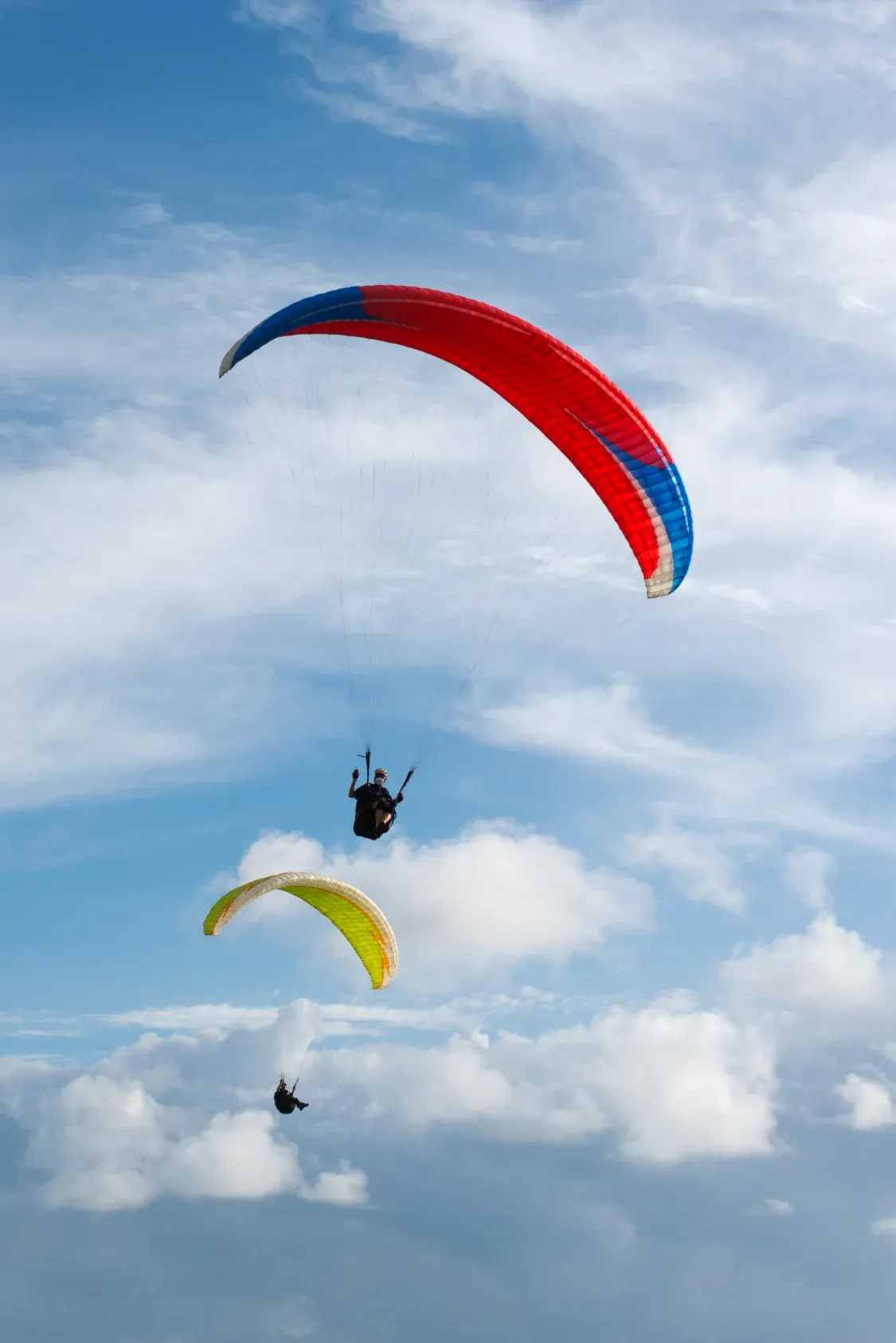
The parachute opening changes everything. The noise stops, the speed drops, and you go from 200 km/h to a gentle glide in a few seconds. The canopy phase lasts about two and a half minutes and is the part of the jump where you can actually take in where you are: the Gulf of Thailand stretching out, islands offshore, the beach line, and the landing area getting closer. Your instructor steers with two toggles and, on most jumps, will let you hold them for a while. Ask during the briefing if you would like a few tighter turns; some people love the spiralling sensation and others prefer a calm descent.
Elif, Türkiye, VIP+: "Hotel pickup, smooth briefing, zero stress. The view of the islands from the canopy is worth the price alone. VIP+ was the right call."
Landing is usually a slide onto the grass with your legs lifted, exactly as practised on the ground. The instructor flares the parachute just before touchdown, and it is much softer than most people expect.
Do you need oxygen at 13,000 ft?
Generally, no. A 13,000 ft tandem exit is routinely made without supplemental oxygen, which is one reason this altitude is so common for tandem skydiving worldwide. The time spent near the top of the climb is short, and you descend fast, so the body has little chance to be affected by the thinner air.
Be honest about your health when you book. If you have a heart or lung condition or recent surgery, mention it to the desk and follow your medical advice; the dropzone staff make the final call on the day. For everyone else, the altitude needs no preparation beyond a good breakfast and a decent night's sleep.
Timeline from check-in to landing
The table puts the numbers in order. Times are those listed by Pattaya Skydiving as of September 2026 and are identical at both dropzones.
| Phase | Duration | What happens |
|---|---|---|
| Check-in and briefing | About 20 minutes | Paperwork, weight check, exit and landing practice |
| Waiting and gearing up | Varies by load | Harness fitting, instructor introduction, weather check |
| Climb to altitude | About 15 minutes | Aircraft climbs to 13,000 ft over the Chonburi coast |
| Freefall | About 60 seconds | Roughly 200 km/h until the main parachute opens |
| Canopy flight | About two and a half minutes | Steered descent, views of the Gulf of Thailand |
| Landing and video | Same day | Handcam or outside camera footage edited and delivered |
Plan on about 4 to 5 hours on site in total. If you booked a camera package, the footage is edited the same day, so you leave with the video on your phone or a link before you head back to Pattaya. The full day, from hotel pickup to certificate, is described in the tandem skydiving in Pattaya guide.
What the altitude means for your booking
Because the exit height is fixed at 13,000 ft across all seven packages, the choice you actually make is about footage and which dropzone suits your group. Thai Sky Adventures has four packages including VIP+ with both camera angles, while Dropzone Thailand has three and works well for groups. The locations page compares them side by side.
Weight matters more than height when it comes to eligibility. The limit is around 100 kg, with a small surcharge possible above 90 kg, and the minimum age is 12 with a guardian's consent. Full details are in the post on weight and age limits. If the weather closes in, the load waits or reschedules for free.
Frequently asked questions
How high do you skydive from in Pattaya?
Tandem jumps at both licensed Pattaya dropzones, Thai Sky Adventures and Dropzone Thailand, exit at 13,000 ft, which is about 4,000 m. The aircraft climbs for around 15 minutes over the Chonburi coast before the exit, and the whole visit takes about 4 to 5 hours including the briefing.
What is the standard skydiving height for a tandem jump?
There is no single worldwide standard. Tandem exit heights typically fall between roughly 10,000 ft and 15,000 ft depending on the aircraft, airspace and the dropzone's procedures. In Thailand, both Pattaya dropzones use 13,000 ft for every tandem package, which gives about 60 seconds of freefall without supplemental oxygen.
How long does freefall last from 13,000 ft?
From a 13,000 ft exit a tandem pair falls for about 60 seconds before the instructor opens the main parachute. The exact time varies slightly with body weight and position, but one minute is the figure to expect. The canopy ride that follows lasts about two and a half minutes more.
Do you need oxygen for a 13,000 ft skydive?
Generally no. Tandem jumps at 13,000 ft are routinely made without supplemental oxygen, and the time spent near the top of the climb is short. Higher exits at some dropzones elsewhere may use oxygen, but the standard tandem altitude in Pattaya does not require it for healthy passengers.
How fast do you fall during a tandem skydive?
A tandem pair reaches roughly 200 km/h in freefall. It sounds violent, but once you reach that speed the air pressure holds your body steady and the feeling is closer to floating on a strong wind than dropping. Most first-time jumpers say the speed is far less frightening than expected.
Can I jump from higher than 13,000 ft in Pattaya?
The tandem packages booked through Pattaya Skydiving all use the 13,000 ft exit at both dropzones. There is no higher tandem option on the price list. If you are interested in licensed jumping or training, contact the desk and they will point you toward the right people at the dropzone.
Next step
Ready when you are
Skydiving altitude in Thailand comes down to one number for tandem passengers: 13,000 ft, with about a minute of freefall and about two and a half minutes under canopy above the Gulf of Thailand. Pick a package on the prices page, then send a booking request or message the desk on WhatsApp at +66 91 758 4642. Hotel pickup around Pattaya is arranged with the booking, so all you need to bring is sporty clothes and lace-up sneakers.