Is skydiving in Thailand safe? Yes, when you jump with a licensed dropzone that uses standard tandem equipment, holds its weather decisions to fixed limits and is open about how it works. The two licensed dropzones near Pattaya, on the Chonburi coast of the Gulf of Thailand, meet that description. This guide covers what protects you on any tandem jump, how the Pattaya operations run, how to spot a legitimate operator anywhere in Asia, and who is allowed to jump.
Quick answer
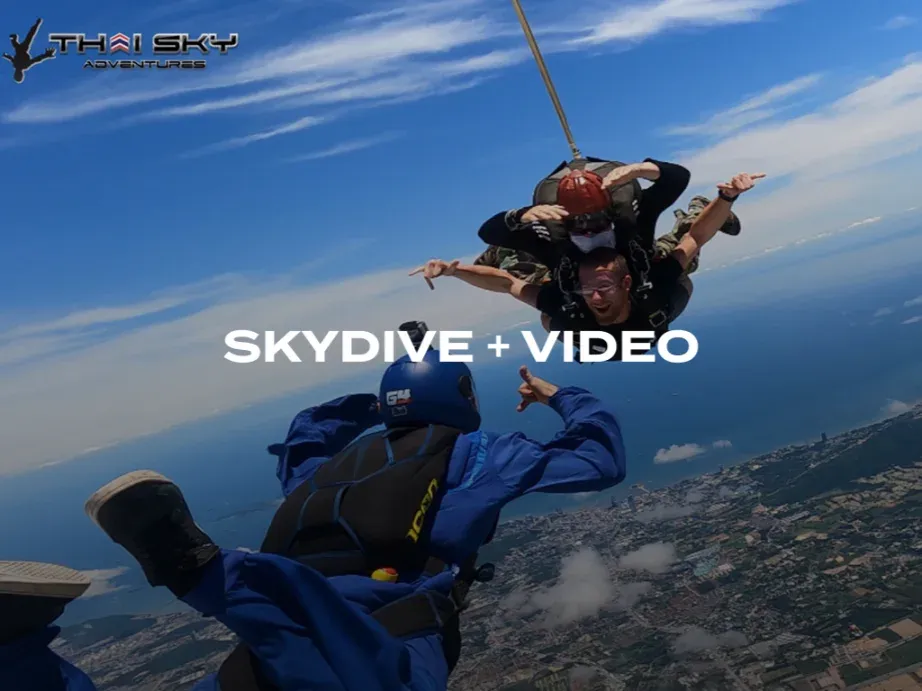
Skydiving in Thailand is safe when it is done at a licensed dropzone. Pattaya has two, Thai Sky Adventures and Dropzone Thailand, both exiting at 13,000 ft over the Gulf of Thailand with a main parachute, reserve parachute and automatic activation device on every rig, internationally certified instructors, and weather checked before every load. Pattaya Skydiving books both as of September 2026.
| Fact | Pattaya dropzones (as of September 2026) |
|---|---|
| Location | Chonburi coast, approximately 1.5 to 2 hours by road from Bangkok |
| Exit altitude | 13,000 ft over the Gulf of Thailand |
| Freefall | About 60 seconds at roughly 200 km/h |
| Parachute system | Main, reserve and automatic activation device on every tandem rig |
| Instructors | Internationally certified tandem instructors |
| Weather decision | Made load by load, three fixed stop conditions |
| Passenger limits | Minimum age 12 with guardian consent, weight limit around 100 kg |
| Personal cameras | Not allowed on tandem jumps (snag hazard) |
| Payment | Cash at the dropzone desk at check-in, no prepayment on the site |
How safe is tandem skydiving
Tandem skydiving is designed around redundancy. What is on your back and who is flying you are the same at any licensed dropzone in the world.
Three layers of parachute
The main parachute is the large, docile two-person canopy you fly under for about two and a half minutes, packed and inspected by the dropzone's own staff. The reserve is a second, fully independent parachute in the same container; if the instructor is not happy with the main for any reason, they release it and deploy the reserve. Reserves are typically inspected and repacked by a certified rigger on a fixed schedule.
The automatic activation device, or AAD, is a small computer inside the container that measures altitude and descent speed. If the pair is still falling at freefall speed below a preset height, it cuts the reserve closing loop and the reserve opens without any human input.
Every tandem rig at both Pattaya dropzones carries a main parachute, a reserve parachute and an automatic activation device.
| Layer | What it is | When it is used |
|---|---|---|
| Main parachute | Large two-person canopy deployed by the instructor | Every jump |
| Reserve parachute | Independent second canopy in the same container | Only if the main is released |
| Automatic activation device | Altitude and speed sensor that fires the reserve | Only if nothing is open at a preset height |
Instructor ratings
A tandem instructor is not simply an experienced skydiver. Tandem ratings are issued through national parachute associations and equipment manufacturers, and they typically require a minimum number of jumps, minimum time in the sport, a dedicated tandem course and ongoing currency checks. The United States Parachute Association publishes its instructional rating requirements openly.
The instructor makes every decision in the air: exit, body position, deployment height, canopy flight and landing. Your job is the arch from the briefing and one leg lift when told. Good instructors also decline a passenger who is above the weight limit or has been drinking; a refusal at the desk is a safety system working.
How the two Pattaya dropzones operate
Pattaya Skydiving is a booking desk in Pattaya City, open daily from 08:00 to 18:00, that books tandem jumps at both licensed dropzones on the coast. The jump itself is delivered by the dropzone, which is why the parachute system, altitude and instructor standard are identical whichever one you choose.
Thai Sky Adventures offers four packages, and it is the only one of the two with a VIP+ option that includes both a handcam and an outside cameraman. Dropzone Thailand offers three packages and works well for groups, who usually jump the same morning across consecutive loads. The locations page compares the two side by side, and the tandem skydiving in Pattaya guide walks through the whole day.
The day follows the same shape at both: hotel pickup, check-in and weighing, a briefing of about 20 minutes, harness fitting, roughly 15 minutes of climb to 13,000 ft, and about 4 to 5 hours on site in total. Photos and video are delivered the same day.
Load-by-load weather calls, not daily forecasts
The most Thailand-specific safety question is weather. Thailand has a cool, dry season from roughly November to February, a hot season from March to May, and a rainy season from roughly May or June to October. Rain in the rainy season usually arrives as short afternoon bursts, and mornings are often perfectly jumpable.
That pattern is why the Pattaya dropzones never call a whole day off from the morning forecast. Each load is assessed as it is about to board. Three things stop a load:
- Wind above limits at ground level, because a tandem canopy is large and lands slowly.
- Cloud between the aircraft and the landing area, because the instructor has to see where they are landing from the exit point.
- Rain heavy enough to hurt at roughly 200 km/h.
If any one of those is present, the load waits; if the sky clears twenty minutes later, the load goes. The Thai Meteorological Department publishes forecasts at tmd.go.th, but the decision that matters is made on the ground at the dropzone.
Both Pattaya dropzones assess the weather load by load, so a rainy forecast does not by itself cancel a jump.
Aiko from Japan, a Google reviewer who booked the Deluxe package: "Weather cancelled our first slot and they rebooked us the next morning, no arguing, no extra charge. That alone earned the five stars." For a month-by-month picture, see the best time to skydive in Thailand, the Pattaya skydiving weather guide and the post on skydiving during the rainy season in Thailand.
Is skydiving in Asia legit? Seven checks before you pay anyone
Skydiving in Asia is legitimate wherever a licensed dropzone is behind the booking; the tandem standard in Thailand is the same one used in Europe, Australia and the United States. What varies is the booking layer: resellers, hotel counters and chat accounts that may not be connected to a real dropzone. The seven checks below sort the two apart, in Pattaya or anywhere else in Asia.
- Which dropzone will you actually jump at, and is it licensed? Ask for the name, not just a town. Pattaya Skydiving names both of its dropzones on every page.
- What is on the rig? The answer should include a main parachute, a reserve parachute and an automatic activation device. If the person cannot name those three things, keep looking.
- What rating do the tandem instructors hold? A straight answer about international tandem ratings is a good sign.
- How is weather decided? "Load by load" is the answer you want. "We fly whatever the weather" is not.
- What happens to your money if weather cancels? Free reschedule and a refund if you are leaving the country is the fair standard.
- How do they want to be paid? A legitimate desk does not need your card details over chat. Pattaya Skydiving takes no prepayment on the site; payment is in cash at the dropzone desk at check-in, with card or bank transfer on request.
- Can you see recent, dated reviews? Pattaya Skydiving holds a 5.0 Google rating from more than 750 reviews as of September 2026.
For a wider view of the region, best dropzones in Asia applies the same checks to other destinations.
Red flags that should make you walk away
- Pressure to pay in full online, or a request for card details over chat.
- A price far below the market. As listed on 3 September 2026, the entry package at both Pattaya dropzones is ฿8,450 ($235); the prices page shows all seven. A jump advertised at a fraction of that is cutting something.
- No clear answer on which dropzone you will use, or a promise that the weather never stops jumps.
- Willingness to take a passenger who has been drinking, or who is well above the weight limit, "just this once".
- Staff who discourage questions about the gear, or no mention of a ground briefing at all.
Meet one of these and book somewhere that answers the seven questions above.
Skydive Pattaya vs Chiang Mai: does location change the safety picture?
People comparing Pattaya with Chiang Mai, or Thailand with Dubai or Cebu, sometimes assume one is safer than the other. In our experience the safety standard is set by licensing and the tandem system, not by the town. A licensed dropzone anywhere should be running the same three-layer rig and instructor ratings as Pattaya. Judge any of them by the seven checks, not by the scenery.
What does differ is weather and practical set-up. The two Pattaya dropzones sit side by side on the Chonburi coast, approximately 1.5 to 2 hours from Bangkok, exit over the sea, and run daily tandem loads through all three Thai seasons. Northern Thailand generally has a pleasant cool season, but the February to April period brings agricultural smoke haze across the north that can reduce visibility. That is a scheduling question rather than a safety one; the season-by-season comparison is in best time to skydive in Thailand.
Who can skydive
Who can skydive in Thailand comes down to four things: age, weight, health and sobriety. The minimum age at both Pattaya dropzones is 12 with a guardian's consent. The weight limit is around 100 kg, and a small surcharge may apply above 90 kg, because the tandem canopy and the landing depend on the combined load. There is no stated upper age limit; fitness matters more than the number.
On health, the instructor asks about conditions before fitting the harness. Opening shock, a firm harness and a landing where your legs take some load mean a heart condition, high blood pressure, epilepsy, recent surgery or a chronic back, neck or knee problem is worth a conversation with your doctor first. Pregnancy is normally a reason to postpone, and anyone who appears to have been drinking is turned away. The full rules are in skydiving weight and age limits in Thailand.
How booking through Pattaya Skydiving works
The safety of a booking is also about not losing money. You send a request through the booking form, WhatsApp, LINE or Telegram, and the slot is confirmed only when the desk replies, with no prepayment on the site. Book 2 to 3 days ahead in a normal week, about a week for holidays and long weekends. Hotel pickup around Pattaya is arranged with the booking.
Weather reschedules are free, there is no change fee for moving a date, and if you are leaving Thailand the deposit is refunded. The full process is in how to book skydiving in Thailand.
Insurance and the one thing the desk cannot do for you
Pattaya Skydiving does not sell insurance. Standard travel policies often exclude skydiving, and some insurers offer adventure-sport add-ons, so read your own policy wording before you fly. The post on skydiving insurance in Thailand covers the questions to ask. Nerves are the other thing the desk cannot remove; fear at the door is normal and not a measure of the actual risk. If that is your main worry, read how to overcome fear of skydiving first.
Frequently asked questions
Is skydiving in Thailand regulated?
Skydiving in Thailand runs from licensed dropzones that operate aircraft under Thai civil aviation rules and use tandem equipment and instructor ratings from the same international systems found in Europe, Australia and the United States. The two Pattaya dropzones, Thai Sky Adventures and Dropzone Thailand, are both licensed operations on the Chonburi coast.
Is skydiving in Asia legit?
Licensed dropzones across Asia work to the same tandem standard as Europe or Australia: a main parachute, a reserve and an automatic activation device on every rig, rated instructors and fixed weather limits. What varies is the booking layer. Ask for the dropzone name, refuse full prepayment over chat, and read dated reviews before you pay anyone.
How safe is tandem skydiving compared with a solo jump?
Tandem is the format built for beginners. A certified instructor handles the exit, freefall position, deployment and landing, and the rig carries three independent layers: main parachute, reserve parachute and an automatic activation device that fires the reserve on its own. Your training is a ground briefing of about 20 minutes and one leg lift on landing.
How do Pattaya dropzones decide whether the weather is safe?
They decide load by load, not day by day. Before each aircraft boards, staff check wind at ground level, cloud between the exit altitude and the landing area, and rain. Any one of those three stops the load. A held load is simply reassessed later, often the same morning once the cloud moves off the coast.
What happens if the weather cancels my jump and I am leaving Thailand?
Through Pattaya Skydiving, weather reschedules are free and there is no change fee for moving the date. If you cannot wait because you are leaving the country, the deposit is refunded. Mornings are usually the most reliable time to jump, especially in the rainy season, so book an early slot if your dates are tight.
Who can skydive in Thailand?
Almost any healthy adult, and teenagers from 12 with a guardian's consent. The weight limit at both Pattaya dropzones is around 100 kg, with a small surcharge possible above 90 kg. There is no stated upper age limit; fitness matters more than the number. Anyone who has been drinking, or who is pregnant, is turned away at the desk.
Next step
Ready when you are
Is skydiving in Thailand safe? At a licensed dropzone with a full tandem rig, certified instructors and load-by-load weather calls, yes, and the two Pattaya dropzones give you exactly that about two hours from Bangkok. Ask the seven questions above wherever you book in Asia. When you are ready, compare the packages on the prices page and send a booking request; the desk confirms on WhatsApp and arranges your hotel pickup.